Baren Work series
Between around 1965 and 1975, while working simultaneously in abstract painting and woodblock printing, Hajime Van began to move away from the traditional process of carving woodblocks. Instead, he turned to the baren—the tool normally used to transfer ink from a woodblock onto paper—as a means of expression in itself.
Rubbing, pressing, drawing circles: each movement left a different trace, shaped by pressure, speed, direction, and even the rhythm of the artist’s breathing. Van transformed the act of “printing” into an act of “drawing” with the baren, directly recording the movement of his body on paper. He called this approach “Baren Work: Stroke.”
What Van sought was to capture lines and colors that could exist only in that particular moment.
In 1977, this exploration developed into “Baren Work: Stripe.”
Van finely carved the woodblock into linear patterns, printed them onto washi, and then rolled, wove, and assembled the printed paper itself. In this process, paper was no longer simply a flat support receiving ink. It became thread, structure, and ultimately an independent material that formed the work itself.
This was made possible by Yame washi specially produced for Van by Mr. Takayama—a paper combining exceptional strength with remarkable delicacy.
In “Stroke,” Van transferred the physical act of printing—the movement of his body—onto washi. In “Stripe,” he went further, transforming the paper being printed into the very structure of the artwork.
Together, these two approaches define Hajime Van’s “Baren Work.”
STRIPE (1979-1981)
Creating the unrepeatable through a medium traditionally associated with reproduction.
In this series, Van extends the possibilities of printmaking beyond the two-dimensional surface and into sculptural form.
Sheets of Yame washi, imbued with shades of blue, including pigments derived from lapis lazuli, are rolled, woven, and assembled. Through this process, the printed paper is transformed from a passive support into an active material that constitutes the structure of the work itself.
Central to this exploration was specially commissioned Yame washi handmade by master papermaker Eiichi Takayama. Its exceptional strength and delicacy allowed Van to manipulate the paper in ways that would otherwise have been difficult to achieve.
Beginning with a medium capable of producing multiple impressions, Van developed singular sculptural works that resist exact replication.

Baren work stripe 1, 1977-1990, Lapis lazuli pigment on Japanese paper, 68.5 × 47cm

Baren work stripe 2, 1977-1990, Lapis lazuli pigment on Japanese paper, 66.5 × 47.5cm

Baren work stripe three dimensional 10, 1977-1990, Lapis lazuli pigment on Japanese paper, 200 × 100cm
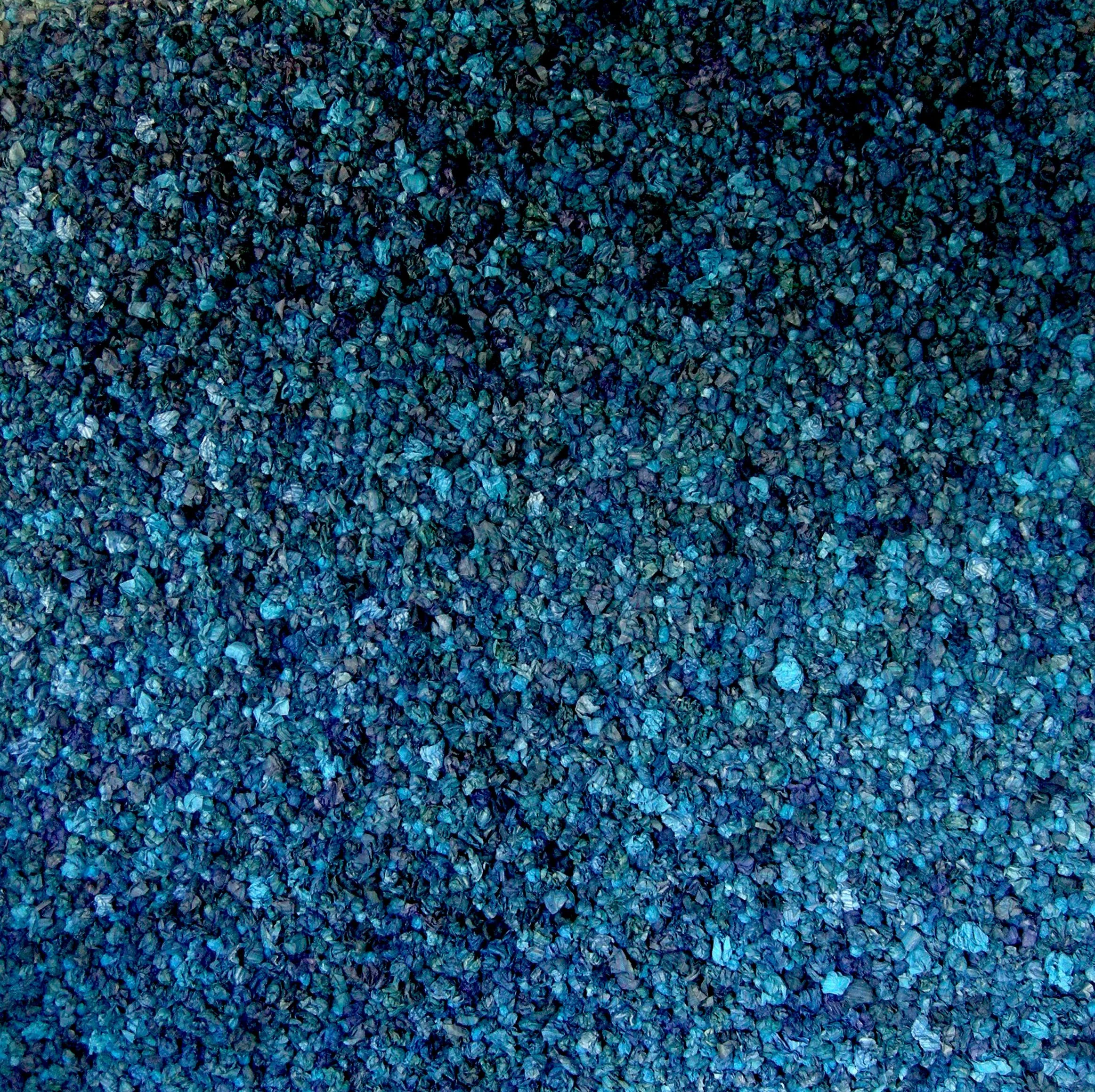
Baren work stripe three dimensional 5, 1977-1990, Lapis lazuli pigment on Japanese paper, 91.5 x 91.5cm

Baren work stripe three dimensional 9, 1977-1990, Lapis lazuli pigment on Japanese paper, 91.5 x 91.5cm
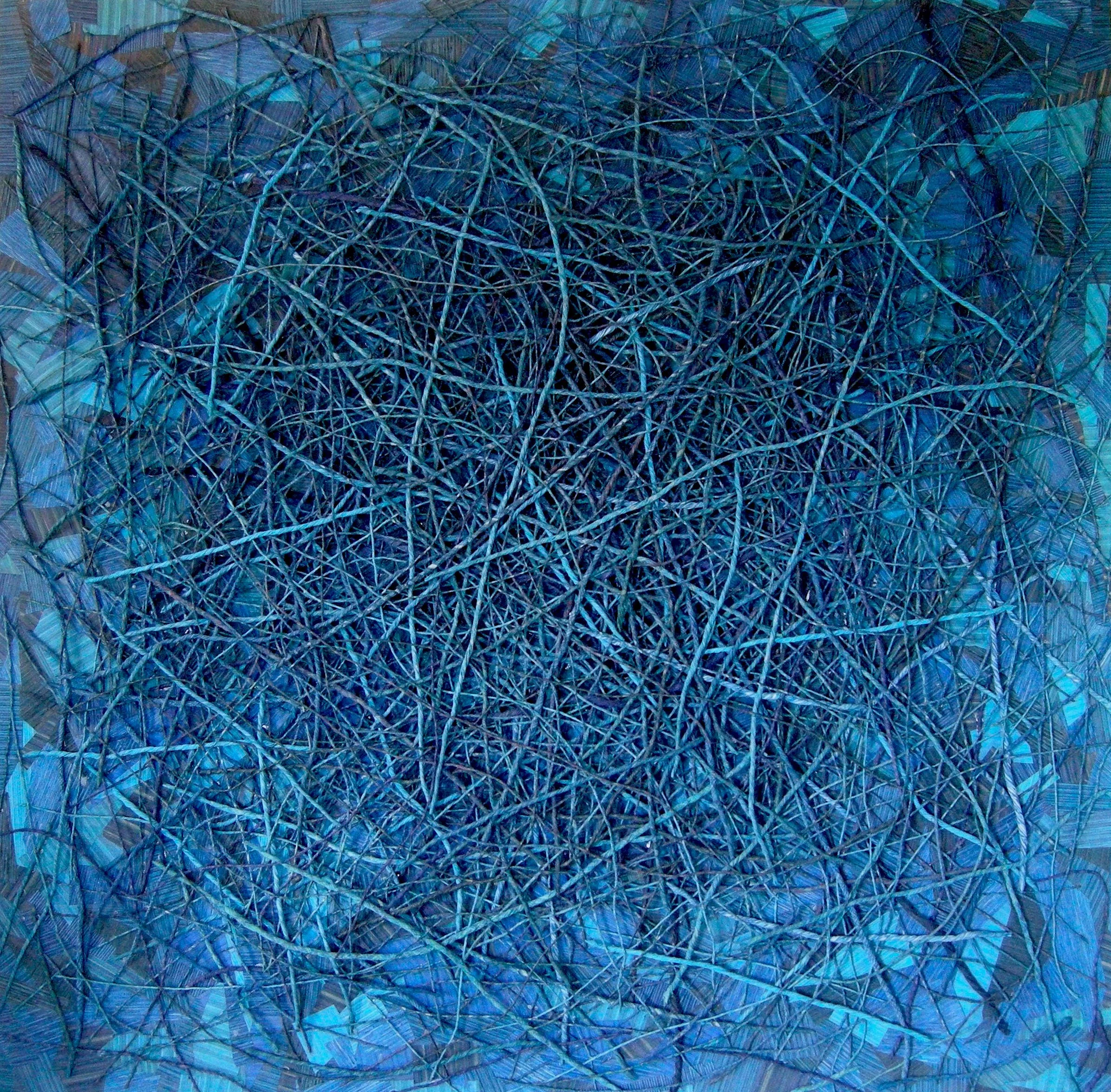
Baren work stripe three dimensional 3, 1977-1990, Lapis lazuli pigment on Japanese paper, 91.5 x 91.5cm
Stroke (1979-1982)
Transforming the act of printing into an act of drawing.
In this series, Van reimagines the baren, a traditional Japanese tool used in woodblock printing, as an instrument for directly recording bodily movement.
Rubbing, pressing, and moving the baren in circular gestures, he creates marks shaped by variations in pressure, speed, and direction. Each impression bears a distinct trace of the artist's physical engagement.
By questioning the reproducible nature of printmaking, Van transforms the printing process into an immediate expression of gesture and energy, capturing movements that can never be repeated in precisely the same way.

Baren work stroke 6, 1977-1990, Lapis lazuli pigment on Japanese paper, 68.5 x 47cm

Baren work stroke 8, 1977-1990, Lapis lazuli pigment on Japanese paper, 68.5 x 47cm

Baren work stroke 9, 1977-1990, Lapis lazuli pigment on Japanese paper, 68.5 x 47cm

Baren work stroke 19, 1977-1990, Lapis lazuli pigment on Japanese paper, 67×46cm

Baren work stroke 23, 1977-1990, Lapis lazuli pigment on Japanese paper, 68.5×48cm

Baren work stroke 24, 1977-1990, Lapis lazuli pigment on Japanese paper, 68×48cm