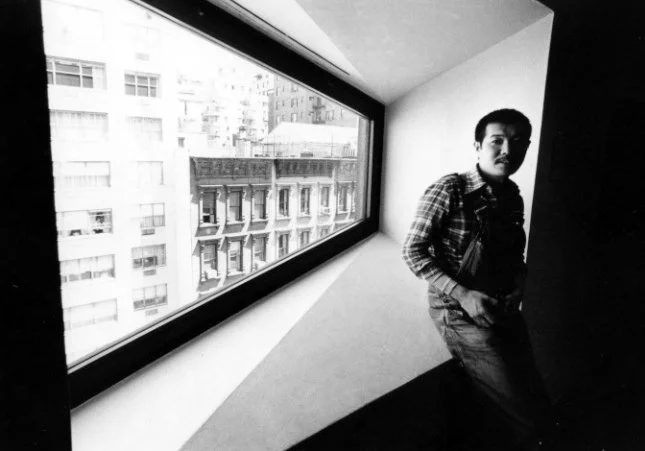
at (old) Whitney Museum
Hajime Van ばん はじめ
“I was interested in confronting myself completely—digging into my own center and exploring what could be seen beyond personal limits. It was a feeling connected to the Zen and yoga philosophies I encountered in New York. So I continued to paint. People, stars, landscapes, emotions, passion, even the universe—this is how they appeared to me. I made a promise to myself: if I was not going to show my work to anyone, then I would create only my very best work. I also wanted to pursue every aspect of my materials without compromise.”
— Hajime Van
During the 1970s, Hajime Van devoted himself entirely to painting, working between Tokyo, New York, and Los Angeles. Over those years, he produced a substantial body of work, yet almost none of it was publicly exhibited. Instead, the paintings remained carefully stored and unseen for decades.
In the early 1970s, feeling constrained by the artistic environment in Japan, Van moved to the United States. While preparing for a solo exhibition in New York, he encountered the struggles and disillusionment of many successful artists he had once admired. After returning to Japan, he found himself facing similar realities. Although he continued traveling between Japan and the United States, he gradually came to realize that the desire to exhibit and gain recognition could itself become an obstacle to genuine self-expression.
As a result, Van chose a different path. Rather than creating work for an audience or for critical approval, he devoted himself exclusively to making the paintings he felt compelled to create. Free from external expectations, he pursued a deeply personal visual language that evolved into a unique form of abstraction.
For the next four decades, Van continued painting without publicly exhibiting these works. Professionally, he focused on design and painting commissions for corporations, contributing to numerous projects in Japan and abroad while keeping his personal artistic practice private.
In the summer of 2023, during the demolition of his studio, a remarkable discovery was made. Hidden within the walls were paintings that had remained untouched for decades. Emerging with their original colors still strikingly intact, the works seemed to reappear from another time.
The paintings of Hajime Van represent more than forty years of artistic inquiry and dedication. Developed outside the influence of trends, markets, and public recognition, they reveal a singular body of work shaped by an uncompromising commitment to personal vision.
Biography
1941 Born in Amagasaki city, Hyogo, Japan.
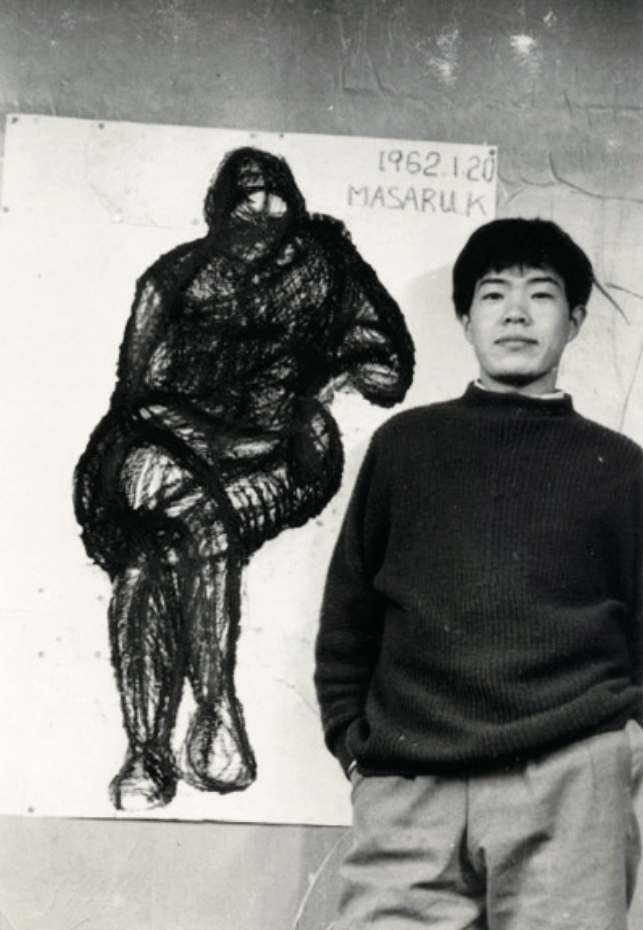
1962
1967 First submission to the public competition of the Nika Exhibition and received the Special Selection Award. The painting was subsequently acquired by Japan’s Ministry of Finance. He continued to exhibit successfully, being selected for the exhibition for five consecutive years.
1971 Traveled to Europe. During a journey from the Arctic region of Norway down to Italy, he resolved to devote himself fully to becoming a painter.
1972 - 1978 Traveled between New York, Santa Monica, and Japan, completing the early K.J.L.H. series.
1975 Print exhibition at Gallery Décor in Ginza, Tokyo.
1978 Established his design studio in Tokyo.
1978-2022 During this period, he worked as a designer for many internationally recognized companies and clients, while continuing to create and develop his own artworks.
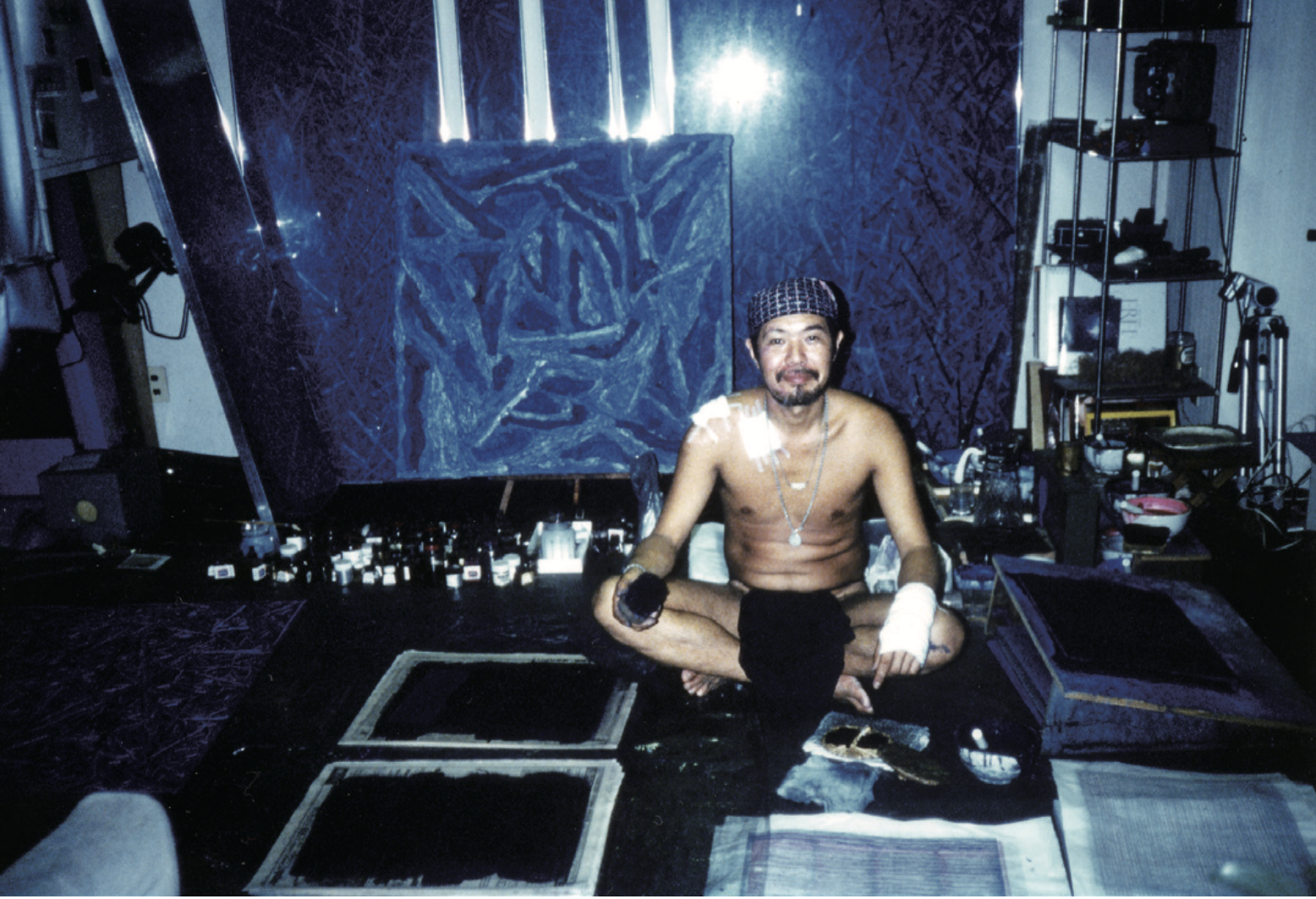
in the studio, 1980
2023 Approx. 2,000 works that Ban himself had stored inside the walls of his Kachidoki studio around 40 years earlier were rediscovered.
Client Works
Fashion
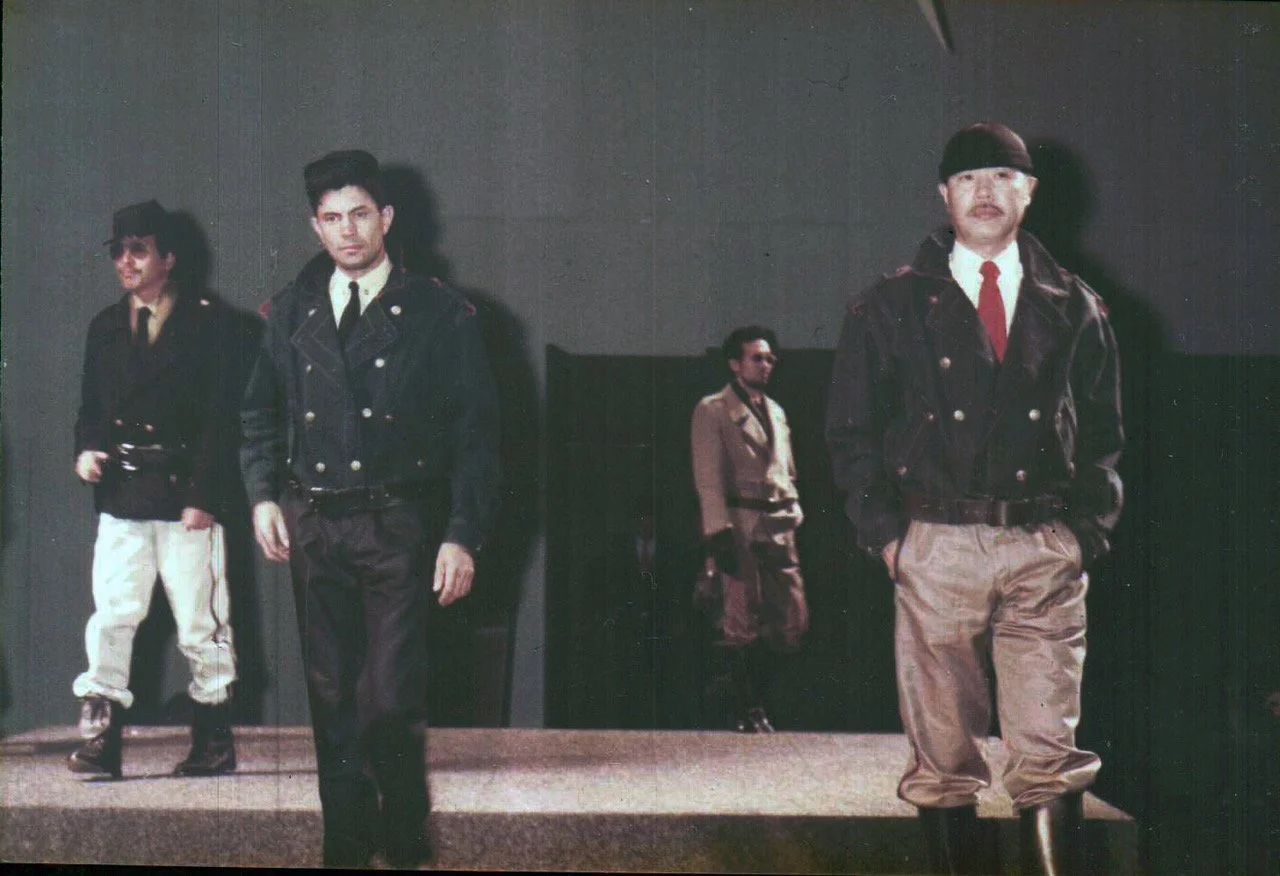
on the far right at Kansai Yamamoto Show in 1980s
- Kansai Yamamoto — Commissioned to create textile designs for Paris collections; Van also appeared as a model in fashion shows.
- Jean Paul Gaultier — Designed costumes for a collaborative project with Onward Kashiyama.
Music
- Montserrat Caballé — Designed promotional materials and sales programs for “Barcelona,” Caballé’s duet with Freddie Mercury of Queen, which became associated with the Barcelona Olympics.
- Herbert von Karajan — Designed posters, programs, and promotional materials for the legendary conductor.
- Alfred Brendel — Designed magazine layouts and promotional goods for the world-renowned pianist.
- The Three Tenors — Designed promotional materials and sales programs for Luciano Pavarotti, Plácido Domingo, and José Carreras.
- Hermann Prey — Designed posters, flyers, and promotional materials.
- Atsuko Azuma — Produced promotional and program materials for the triumphant Japanese performances of Madama Butterfly.
- Fiorenza Cossotto — Designed posters and programs for the Italian mezzo-soprano’s performances in Japan.
- Yamaha Popular Song Contest (POPCON) / World Popular Song Festival — Produced promotional materials, merchandise, and woodblock-print calendars.
- Live Under the Sky — Designed promotional materials, merchandise, and calendars for the jazz festival from 1977 to 1992.
- Sonny Rollins — From 1981 onward, Ban designed posters, programs, and promotional merchandise for Rollins’ Japan tours, from the earliest tours through the final tour.
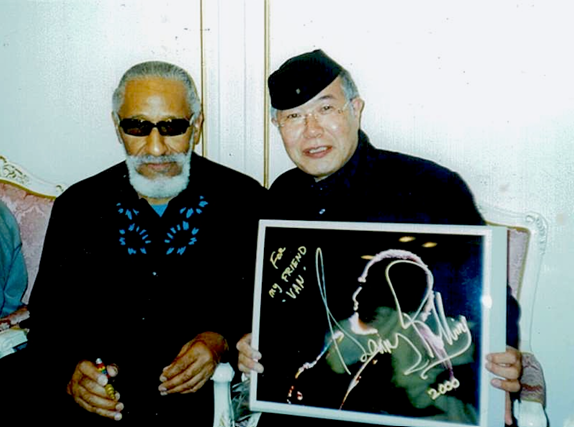
With Sonny Rollins, 2000
Stage & Television
- Maya Plisetskaya — Designed posters and programs for the ballerina’s final Japanese performances of The Dying Swan.
- Margot Fonteyn — Designed posters and programs for the legendary Royal Ballet principal dancer’s performances in Japan.
- NHK New Year’s Eve Music Show and others — Produced digital content planning and stage/set painting for television programs over a 12-year period.
Sports
- Yomiuri Giants (Baseball)— Produced related merchandise for approximately 20 years.
- Verdy Kawasaki (Soccer)— Produced related merchandise for approximately 10 years.
Other Projects
- Disneyland / DisneySea (Japan & Hong Kong) — Decorative painting, aging effects, murals, and attraction/hotel-related artwork.
- Japanese Ministry of Health / Government of Argentina — Conceived and produced materials for a joint ultraviolet exposure survey.
Materials & Technique
Many of my works employ traditional Japanese materials, including Yame Washi Japan paper and mineral pigments.
Produced in Yame City, Fukuoka Prefecture using the pure waters of the Yabe River, Yame Japan paper is said to have originated during the Bunroku era (1592–1596). While the industry once flourished with over 1,700 paper making households from the late Meiji (1910s) through early Showa periods (1930s), only a handful remain today.
Among them, master papermaker Eiichi Takayama—holder of an Intangible Cultural Property designation—personally produced Van’s washi Japan papers. After reviewing Van’s career and work, Takayama promised to make paper only on the coldest day of the year, when the fibers are at their tightest and bacterial activity is at its lowest. For more than ten years, he created custom papers tailored to the required thickness, size, and degree of sizing for Van’s works.
“without this paper, my works could not exist in their present form. “ - Hajime Van
To create his works, Van also relies on traditional Japanese materials such as sumi ink, ink stones, brushes, hake brushes, rare mineral pigments, and nikawa glue. In particular, he makes extensive use of blue pigments, including ultramarine made by crushing lapis lazuli gemstones.
Even after more than forty years, the colors and brilliance of the washi Japan paper and pigments remain remarkably vivid and intact. The striking luminosity seen in many of Van’s works stands as a testament to the enduring beauty of traditional Japanese artistic materials.